
Frozen Shoulder
Frozen Shoulder —
Understanding the Phase
Frozen shoulder is not simply a stiff shoulder. It is a distinct pathological process involving the joint capsule — with three phases, each requiring a different clinical approach. Understanding your phase determines your treatment.
Clinical Overview
What is Frozen Shoulder?
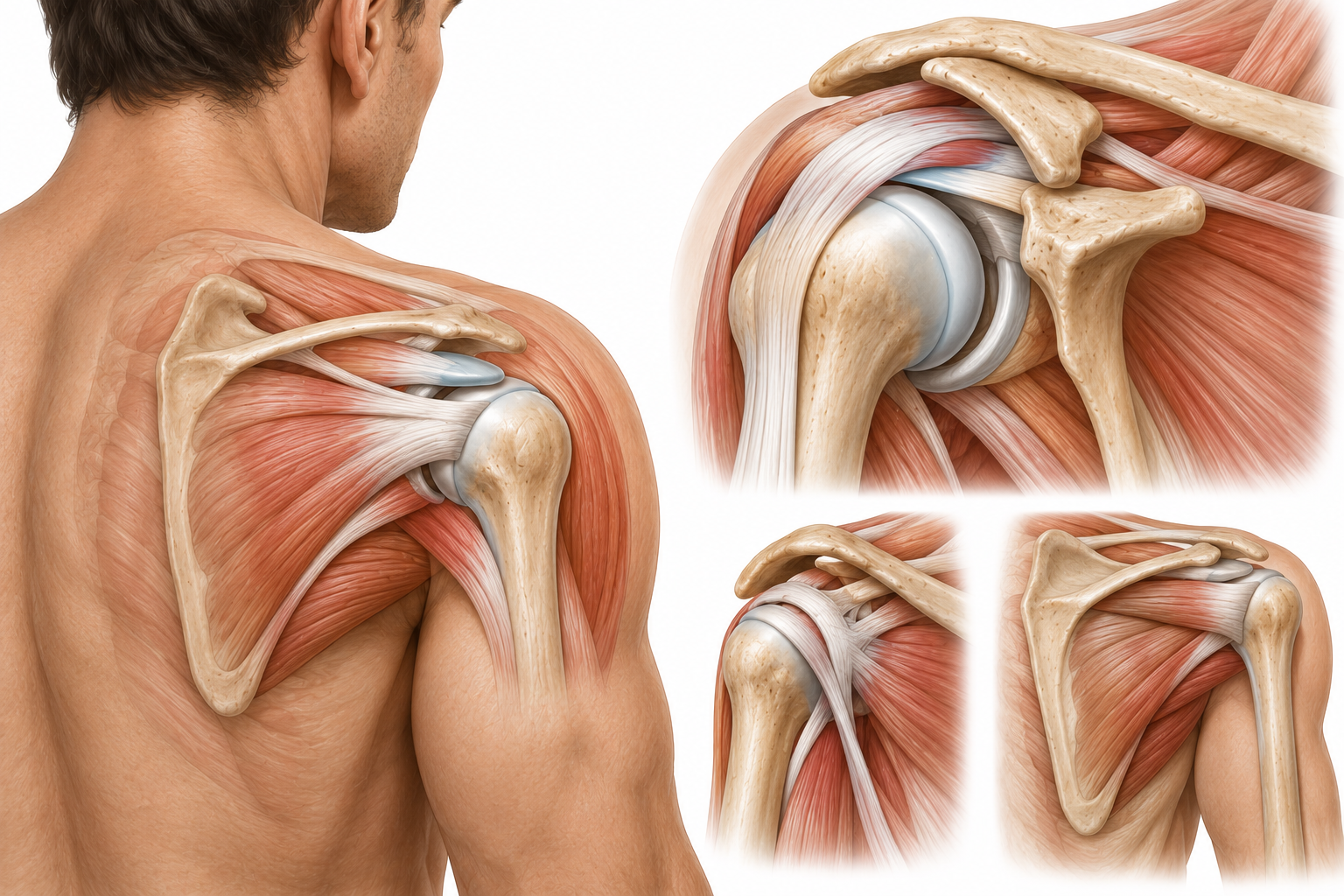
Frozen shoulder — formally adhesive capsulitis — is a pathological process involving progressive fibrosis and contracture of the glenohumeral joint capsule. It is not simply a stiff shoulder; it has a distinct biology involving inflammatory capsular thickening, fibroblast proliferation, and progressive collagen deposition that restricts the joint capsule from all directions. The result is a characteristic global restriction of shoulder movement that distinguishes it from every other shoulder condition.
The condition follows a characteristic three-phase clinical course: a painful freezing phase dominated by inflammation and severe pain; a frozen phase in which stiffness becomes the dominant complaint as the inflammatory activity reduces; and a thawing phase in which the capsular restriction gradually resolves. Each phase has different clinical features, different treatment priorities, and a different prognosis — and each demands a different clinical approach.
Treatment applied in the wrong phase — particularly aggressive stretching and mobilisation during the painful freezing phase — worsens the condition by amplifying the inflammatory response and increasing capsular reactivity. The key to effective management is accurate phase identification before any intervention begins. ROOT METHOD identifies your current phase, grades the severity of the restriction, and builds a phase-specific management plan accordingly.
Clinical Presentation
Common Symptoms of Frozen Shoulder
The symptom pattern of frozen shoulder changes across its three phases. Understanding which phase you are in is essential to selecting the correct treatment approach.
Global Movement Restriction
Loss of external rotation is the hallmark of frozen shoulder and the defining feature of the capsular pattern. All planes of movement are restricted — particularly external rotation, abduction, and internal rotation — distinguishing it from rotator cuff pathology where some movements remain relatively preserved.
Severe Pain Phase
In the early freezing phase, patients experience intense pain — particularly at night — before stiffness becomes the dominant complaint. This pain phase can be severe enough to prevent sleep and is often described as the most distressing period of the condition. Understanding this is the acute inflammatory phase prevents misapplication of aggressive mobilisation.
Gradual Stiffness
Progressive loss of movement in all planes over weeks to months. The freezing phase can last 2–9 months; the frozen phase 4–12 months. Stiffness outlasts the severe pain in most cases, and by the time many patients present for assessment, they are in the frozen phase with the acute pain having subsided but significant restriction remaining.
Muscle Wasting
Disuse atrophy of the deltoid and rotator cuff muscles develops with prolonged restriction, adding weakness to the stiffness and pain. This disuse weakness contributes to ongoing functional limitation even as the primary capsular pathology gradually resolves in the thawing phase, and must be specifically addressed in rehabilitation.
Functional Limitation
Inability to reach overhead, behind the back, or across the body. Daily tasks — dressing, reaching into high cupboards, buckling a seatbelt, driving — become significantly impaired. This functional impact is often the primary concern by the time patients seek assessment in the frozen phase, when acute pain has reduced but restriction remains severe.
Spontaneous Gradual Recovery
The thawing phase involves a slow return of movement over 12–24 months without intervention in most cases. However, not all patients recover fully, and recovery is significantly faster with appropriate phase-matched treatment than with expectant management alone. Early, correct treatment shortens the total course of the condition.
Clinical Aetiology
Common Causes of Frozen Shoulder
In most cases, frozen shoulder arises without a clear single cause. However, several factors are consistently associated with its development.
Idiopathic Onset
The majority of cases have no clear identifiable trigger. The capsular inflammation appears spontaneously in otherwise healthy adults, most commonly between 40 and 60 years of age, with no preceding injury or illness. This idiopathic form is most common in women and in non-dominant shoulders, though neither rule is absolute.
Diabetes Mellitus
Patients with diabetes are 3–5 times more likely to develop frozen shoulder, and their course is typically more severe and more prolonged than in non-diabetic patients. The mechanism involves advanced glycation end-products affecting capsular collagen cross-linking. Diabetes assessment is appropriate in every frozen shoulder presentation.
Post-Immobilisation
Immobilisation of the arm following a fracture, stroke, or shoulder surgery creates the conditions for capsular contracture to develop. Even brief periods of enforced immobilisation can initiate the frozen shoulder process in susceptible individuals. Post-stroke frozen shoulder is a common and debilitating complication that requires early recognition.
Thyroid Dysfunction
Both hypothyroidism and hyperthyroidism are associated with increased risk of developing frozen shoulder. Thyroid screening is appropriate in patients presenting with bilateral cases, recurrent frozen shoulder, or where the clinical course is unusually severe or prolonged. Bilateral frozen shoulder without another identified cause warrants endocrine assessment.
Post-Traumatic
Capsular scarring following any shoulder injury — even a relatively minor one — can trigger the frozen shoulder process. The trauma is often perceived as minor relative to the severity of the subsequent condition, which can make patients feel their reaction is disproportionate. Post-traumatic cases are more common in patients who had preceding shoulder pathology.
Cervical Disc Disease
Upper cervical or C4–C5 disc pathology may contribute to shoulder dysfunction and capsular changes through neurogenic mechanisms and reduced shoulder use secondary to referred pain. In some cases, what appears to be early frozen shoulder is driven by persistent cervical pain inhibiting normal shoulder movement, leading to secondary capsular stiffening.
Clinical Guidance
When to Seek Professional Assessment
Early phase identification is the most important factor in preventing a prolonged course. Seek assessment as soon as progressive stiffness is apparent.
Book a Clinical Assessment If…
- Shoulder stiffness is progressively worsening over weeks to months with no clear improvement
- External rotation is noticeably reduced — difficulty reaching your arm out to the side
- Pain at end range of all directions of shoulder movement
- You have severe night pain preventing sleep alongside developing shoulder stiffness
- You have diabetes and are developing shoulder stiffness — early intervention is particularly important
- Your shoulder has been immobilised following surgery or a fracture and movement is not returning normally
Important Distinction — This is NOT Frozen Shoulder If…
- Sudden acute severe pain with complete loss of elevation after a fall or trauma — this may be an acute rotator cuff tear or dislocation requiring urgent imaging assessment, not frozen shoulder
- Rapid neurological deterioration — arm weakness or hand numbness developing alongside shoulder stiffness requires urgent assessment to exclude cervical pathology
- Systemic features — fever, unexplained weight loss, or inflammatory joint disease affecting multiple joints alongside the shoulder requires urgent medical review
The ROOT METHOD Difference
How ROOT METHOD Approaches Frozen Shoulder
The critical distinction in frozen shoulder management is that the same treatment applied in the wrong phase can worsen the condition rather than improve it. Phase identification is not an optional preliminary step — it is the clinical decision that determines everything that follows.
- Phase identification — freezing (inflammatory, pain-dominant), frozen (stiffness-dominant), thawing (recovery) — established through symptom history and movement assessment
- Severity grading of capsular restriction in all planes: external rotation, abduction, and internal rotation are each measured and documented
- Rotator cuff integrity testing to exclude concurrent pathology that may be modifying the presentation
- Assessment for contributing systemic factors — diabetes, thyroid — that will affect the treatment trajectory and timeline
- Phase-appropriate treatment planning: pain management, activity modification, and gentle range maintenance in the freezing phase; graduated mobilisation in the frozen and thawing phases
Your First Visit
What to Expect During Your Frozen Shoulder Assessment
A ROOT METHOD frozen shoulder assessment establishes your phase, severity, and contributing factors before any treatment is considered.
-
Before You Arrive
Pre-Visit Intake
Complete timeline of onset and progression, which phase currently predominates (pain or stiffness), functional impact on daily activities, contributing medical conditions including diabetes and thyroid history, and prior treatment received. The timeline of symptom evolution is critical for phase determination.
-
Stage 1
Comprehensive Movement Assessment
Shoulder movement assessment in all planes — active and passive range of motion for flexion, abduction, external rotation, and internal rotation. Capsular pattern confirmation through the characteristic global restriction pattern. Phase determination based on the ratio of pain to stiffness and the severity of end-range pain versus mid-range ease.
-
Stage 2
Structural and Systemic Assessment
Rotator cuff integrity testing to exclude concurrent pathology, cervical screening to exclude referred pain, glenohumeral joint accessory motion assessment, and strength testing of the deltoid and rotator cuff to quantify disuse atrophy. Contributing medical factors are noted and their implications for the treatment trajectory discussed.
-
Stage 3
Phase-Specific Protocol
Phase-specific diagnosis, realistic timeline communication based on phase and contributing factors, and a phase-matched treatment protocol. Aggressive mobilisation is never applied during the inflammatory phase. The patient is educated on expected progression and what changes in symptoms indicate a phase transition requiring protocol adjustment.

Common Questions
Questions About Frozen Shoulder and ROOT METHOD
How long does frozen shoulder last?
The full natural history of untreated frozen shoulder is 18–36 months. With appropriate phase-matched treatment, this timeline can be significantly shortened. The freezing phase typically lasts 2–9 months, the frozen phase 4–12 months, and the thawing phase up to 12–24 months — though these ranges overlap considerably between individuals.
Patients with diabetes or thyroid dysfunction tend to have a longer and more severe course. Starting phase-appropriate treatment early — particularly in the freezing phase — offers the greatest opportunity to reduce total duration.
What phase am I in?
The freezing phase is dominated by pain — particularly at night — with relatively preserved shoulder movement at the start, though movement progressively reduces. The frozen phase has severe global restriction of all movement with less intense pain than the freezing phase — patients often notice the pain has reduced but they cannot move their shoulder. The thawing phase shows gradual spontaneous return of movement with minimal pain.
Phase identification requires clinical examination — the ratio of pain to stiffness, the severity of end-range pain, and the degree of restriction in each plane all contribute to the determination. This is the central clinical task of the first ROOT METHOD appointment.
Is physiotherapy helpful in all phases?
Not in the same way — and this distinction is clinically critical. Aggressive joint mobilisation and stretching in the freezing phase worsens pain, increases capsular reactivity, and may not accelerate recovery. Treatment in the freezing phase appropriately focuses on pain management, activity modification, patient education, and gentle range maintenance within pain tolerance.
As the condition transitions to the frozen and thawing phases and inflammatory activity reduces, progressive mobilisation becomes appropriate and effective. This is why applying the same physiotherapy protocol regardless of phase produces inconsistent and often disappointing results.
Can it happen to both shoulders?
Yes — bilateral frozen shoulder occurs in 15–20% of patients, usually sequentially rather than simultaneously. The second shoulder typically develops months to years after the first. Bilateral presentation is more common in patients with diabetes, and bilateral or recurrent frozen shoulder should prompt thyroid and metabolic assessment if not already performed.
Does a cortisone injection help?
Corticosteroid injection is most effective in the freezing phase, where it can reduce pain intensity and potentially shorten the duration of the inflammatory period. It is less effective in the frozen phase and has no meaningful role in the thawing phase. Injection without phase assessment may produce no benefit or only transient partial benefit — which is the most common experience reported by patients who have received injections without clinical phase determination.
Will I recover fully?
The majority of patients achieve functional recovery that allows normal daily activities, though some residual restriction may persist in a proportion of cases — particularly in patients with diabetes, prolonged duration before treatment, or inadequate phase-matched management. Full recovery of movement is more likely with early diagnosis, correct phase identification, and appropriate treatment than with mismanaged or untreated cases.
Realistic expectation-setting is part of every ROOT METHOD frozen shoulder consultation. You will receive an honest assessment of your likely trajectory based on your current phase, severity, and contributing factors.
Frozen Shoulder Has a Phase. We Identify It.
The most common mistake in frozen shoulder management is applying the same treatment regardless of phase. ROOT METHOD identifies your phase, grades your restriction, and delivers a protocol specifically matched to where you are in the condition — not where someone else was.